For Aug. 18, 2023
…audio…
1 – A new report from GridLab at the University of California-Berkeley says the Great Lakes region has significant untapped potential for offshore wind projects.
The report was highlighted by a trade association called the Michigan Energy Innovation Business Council.
It projects that in a high ambition scenario, the U.S. region of the Great Lakes has the potential for 131 gigawatts of offshore wind capacity. That’s the second-highest potential next to a Southeast region which includes Florida.

The report adds that the United States has one of the world’s most robust offshore wind resources and could develop enough offshore wind to provide up to 25 percent of the nation’s electricity supply.
More info is online at 2035report.com.
…
2 – The Alliance for the Great Lakes is pushing for federal legislation to keep industrial plastic pellets out of the Great Lakes.
The environmental group points to research led by the University of Western Ontario that found plastic pellets in all five of the Great Lakes.
The pellets, called “nurdles,” are used as a raw material in the manufacture of plastic products.
They can absorb toxic chemicals and be mistaken for food by small fish and wildlife.
U.S. Senate Bill 2337 was introduced in July to stop industrial plastics from entering the Great Lakes. The alliance is urging people to contact their legislators to have the bill introduced in the House.
It’s called The Plastic Pellet Free Waters Act and would prohibit the discharge of plastic pellets and other pre-production plastic materials from any source involved in their production, molding, use, packaging and/or transport.
…
3 – Did you know there are freshwater jellyfish in Michigan lakes and streams?
The state Department of Natural Resources notes that these jellyfish are common, but rarely seen.
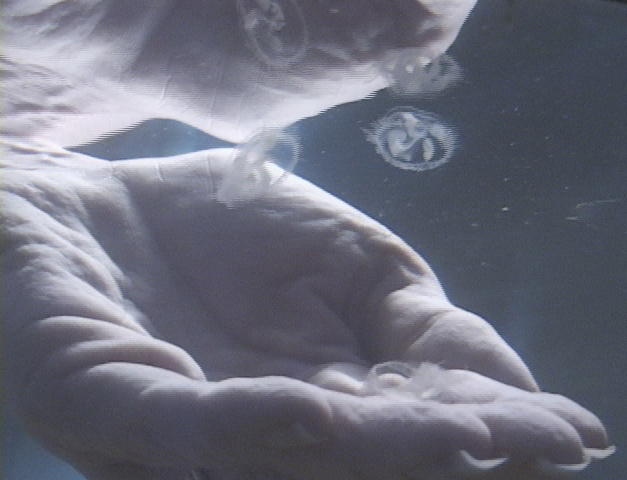
If you do come across one, there’s no need for concern as freshwater jellyfish are not harmful to humans. And it’s believed that they have negligible adverse effects on the environment.
The invertebrates are believed to be native to China and Asia.
Freshwater jellyfish were first documented here in 1933 in the Huron River in southeast Michigan. Today, they can be found in most Michigan lakes and streams, and are most frequently spotted in lakes in the late summer and early fall.
They’re about the size of a penny.
– Mr. Great Lakes is heard Fridays at 9:30 a.m. in Bay City, Michigan, on Delta College Public Radio 90.1 FM (listen live). Follow @jeffkart on Twitter #MrGreatLakes
-30-
 Mr Great Lakes