For Friday, May 10, 2024
1 – A public meeting is planned for Wednesday, May 22, at the Bay City State Park on a three-year Tobico Marsh restoration project.
The Saginaw Bay Cooperative Invasive Species Management Area and Michigan Department of Natural Resources are partnering to restore habitat in the marsh from 2024 through 2026. They’re using funding from a Natural Resource Damage Assessment involving Dow Chemical.
Tobico Marsh is one of the largest remaining freshwater coastal wetlands on the Great Lakes.
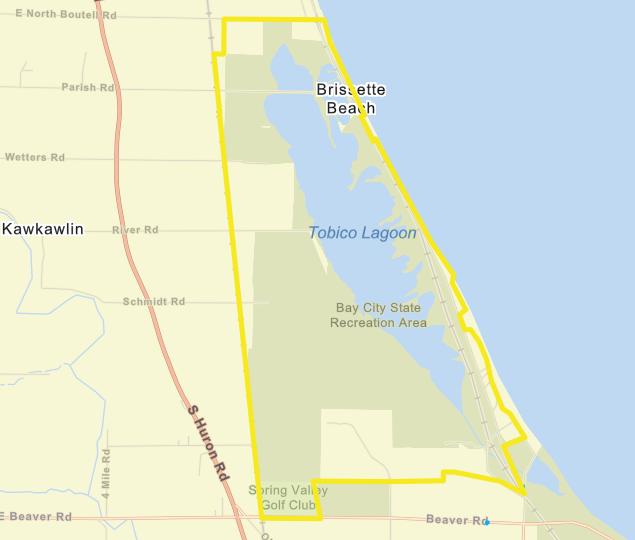
The project will provide resources to address invasive phragmites and buckthorn plants in the marsh and allow for improved mapping and expansion of treatment efforts.
Phragmites outside of the park on adjacent properties also will be mapped and treated during the project, which will require permission from landowners.
The upcoming May 22 meeting, at 6:30 p.m. at the state park Visitor Center, is to provide information to landowners and the general public.
Visit SBCISMA.com for more information.
…
2 – The state has a Pure Michigan program to recognize land and water locations that represent some of the best trail experiences.
This year’s recipients include Highbanks Trail in Iosco County and the Oscoda area at large.
Highbanks, built in 2001, is a 7-mile trail that provides access to the bluffs of the Au Sable River, and traverses Iargo Springs to Sawmill Point, where the U.S. Forest Service maintains 17 primitive campsites and a boat launch.
The Oscoda area provides access to hundreds of miles of hiking, biking, paddling, equestrian, snowmobile and off-road vehicle trails.
More info is available on the Pure Michigan Trails page at Michigan.gov.
…
3 – In Oscoda County, didymo cells have been found in the Au Sable River.
Didymo, also known as “rock snot,” thrives in cold, low-nutrient streams that are generally considered pristine. The cells can form extensive stalks, or blooms, creating dense mats that cover the stream bed and reduce habitat for bugs that are crucial food sources for fish.
Didymo cells were found in algae samples taken from submerged rocks and debris at two boating access sites on the Au Sable north of Luzerne.
No blooms were observed at either site. But Michigan Trout Unlimited and state officials urge anglers and all stream users to properly clean waders, boats and equipment between every site visit.
This can help prevent further spread of didymo, which is believed to be native to at least parts of the Great Lakes basin, along with aquatic invasive species.
– Mr. Great Lakes is heard at 6:45 and 8:45 Friday mornings on Delta College Public Radio 90.1 FM in University Center, Michigan, near Bay City (listen live). Follow @jeffkart on Twitter #MrGreatLakes
-30-
 Mr Great Lakes