For Friday, Aug. 15, 2025
1 – Big batteries are going in at a Consumers Energy power plant in Bay County’s Hampton Township and another Consumers site in Oscoda Township.
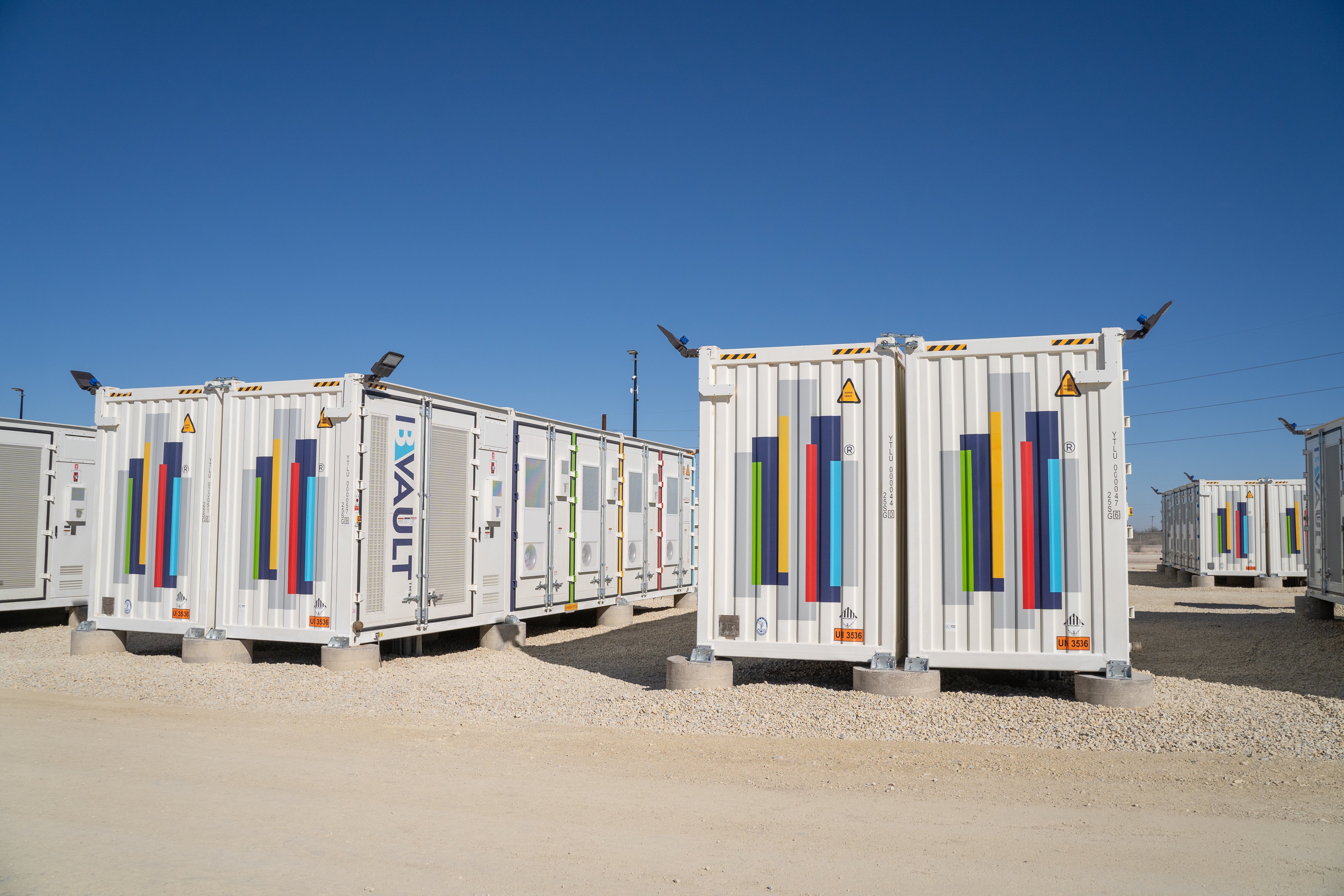
A California company called Energy Vault says the two BESS, or Battery Energy Storage Systems, total 75 megawatts, or 300 megawatt hours. The batteries are expected to be delivered by the end of the year and online by the end of 2026.
A 45-megawatt battery will go to the now-retired Weadock Power Plant in Hampton Township. Oscoda Township will receive a 30 megawatt battery.
Energy Vault says both units will be charged and discharged on a daily basis. They’re designed to dispatch stored renewable energy to help meet Michigan’s power demand during peak consumption hours.
Industry publication Power Engineering says permitting efforts are underway with township officials.
…
2 – Close to 19 million fish have been stocked to rivers and lakes in Michigan this year.
The state says that includes just over 2.5 million walleye.
In total, the fish nearly 19 million fish amount to 331.5 tons. They consist of 10 different species and one hybrid known as splake, a cross between lake trout and brook trout.
The Department of Natural Resources explains that fish stocking is done to provide quality fishing opportunities. The efforts bring almost $4 billion into the state economy through sportfishing, tourism and related business.
…
3 – Federal scientists are testing a new method for keeping invasive carp out of the Great Lakes.
The U.S. Geological Survey will install floating bait platforms and monitoring equipment to capture the creatures. The equipment will be in place until October in part of the Mississippi River near La Crosse, Wisconsin.
Invasive carp, including silver and bighead varieties, pose a threat to native aquatic ecosystems by outcompeting native fish for food and habit.
The floating platforms will be equipped with automatic feeders that dispense bait made from nutrient-rich algae. Commercial fishers contracted by the state of Minnesota will capture fish before and after baiting periods.
A study of the results will help researchers evaluate bait effectiveness and capture methods.
– Mr. Great Lakes is heard at 6:45 and 8:45 Friday mornings on Delta College Public Radio 90.1 FM WUCX in University Center, Michigan, near Bay City (listen live). Follow @jeffkart on Twitter #MrGreatLakes
 Mr Great Lakes