For Friday, Jan. 26, 2024
…audio…
1 – The U.S. Department of Defense will install two more groundwater treatment systems in Oscoda to address PFAS contamination.

U.S. Rep. Elissa Slotkin of Lansing says the announcement is “a milestone moment for Oscoda and its surrounding communities.”
The new groundwater treatment systems are in addition to two others announced in August.
Slotkin says the additional systems represent an even larger investment than those announced previously, and were developed in coordination with community experts.
Oscoda and other communities surrounding the now-closed Wurtsmith Air Force Base have been found to have groundwater containing PFAS levels far greater than those deemed safe by the U.S. Environmental Protection Agency.
PFAS have been used for decades in everything from firefighting foam to food packaging and textiles. The compounds don’t degrade over time and are linked to human health issues including cancer.
The Associated Press cites environmentalists who say the groundwater treatment systems will help prevent PFAS from spreading into the Clarks Marsh area and the Au Sable River near the former base on the shores of Lake Huron.
…
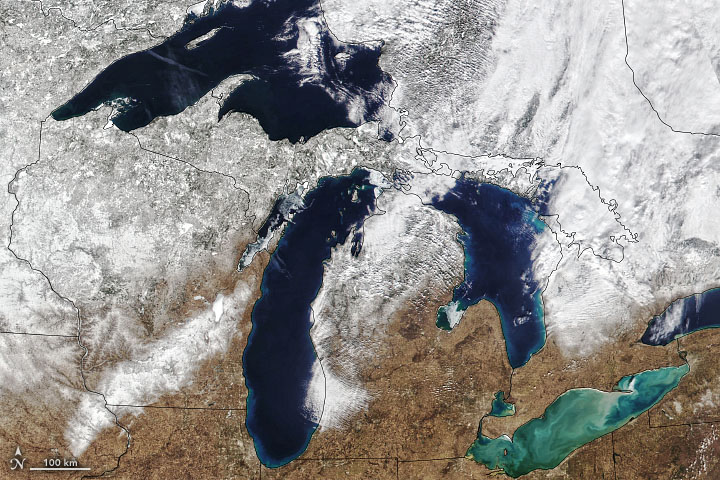
2 – The federal National Oceanic and Atmospheric Administration recently summarized data about low ice coverage on the Great Lakes.
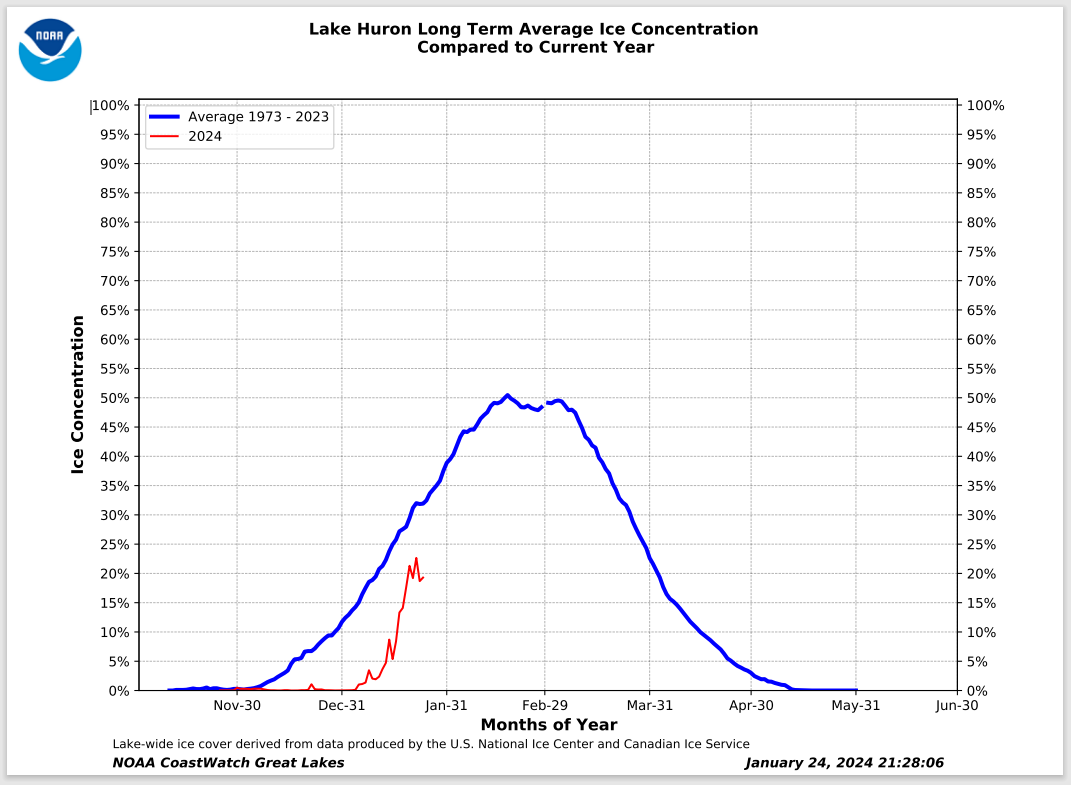
Some highlights:
The average ice coverage for the five lakes between Jan. 1 and Jan. 15 was 1.4 percent. This is the second lowest on record for that time period since 1973.
On average, the Great Lakes experience a basin-wide maximum in annual ice coverage of about 53 percent.
There has been an overall downward trend in Great Lakes ice coverage, with the annual maximum ice coverage decreasing by about 5 percent per decade, or by 25 percent between 1973 and 2023.
It is not unusual to see low ice coverage early in the season. Maximum ice cover for the year usually comes closer to late February and early March.
Ice coverage is something to pay attention to because: thick ice protects lakeshores from erosion and flooding during storms, ice cover prevents evaporation and a lack of ice creates the possibility for lake effect snow. There’s also ice fishing and outdoor sports which should only happen if the ice is thick and solid.
More info is online at research.NOAA.gov.
– Mr. Great Lakes is heard on Friday mornings in Bay City, Michigan, on Delta College Public Radio 90.1 FM (listen live). Follow @jeffkart on Twitter #MrGreatLakes
-30-
 Mr Great Lakes
[…] More PFAS Groundwater Treatment, Less Great Lakes Ice […]